
Buying guide
How to choose your first cymbals
Start with the sounds you will use most: hi-hats for timekeeping, a crash for accents and a ride for a sustained pulse. Compare them at your normal playing volume, and budget for stands and protective fittings as well as the cymbals.
Shop cymbals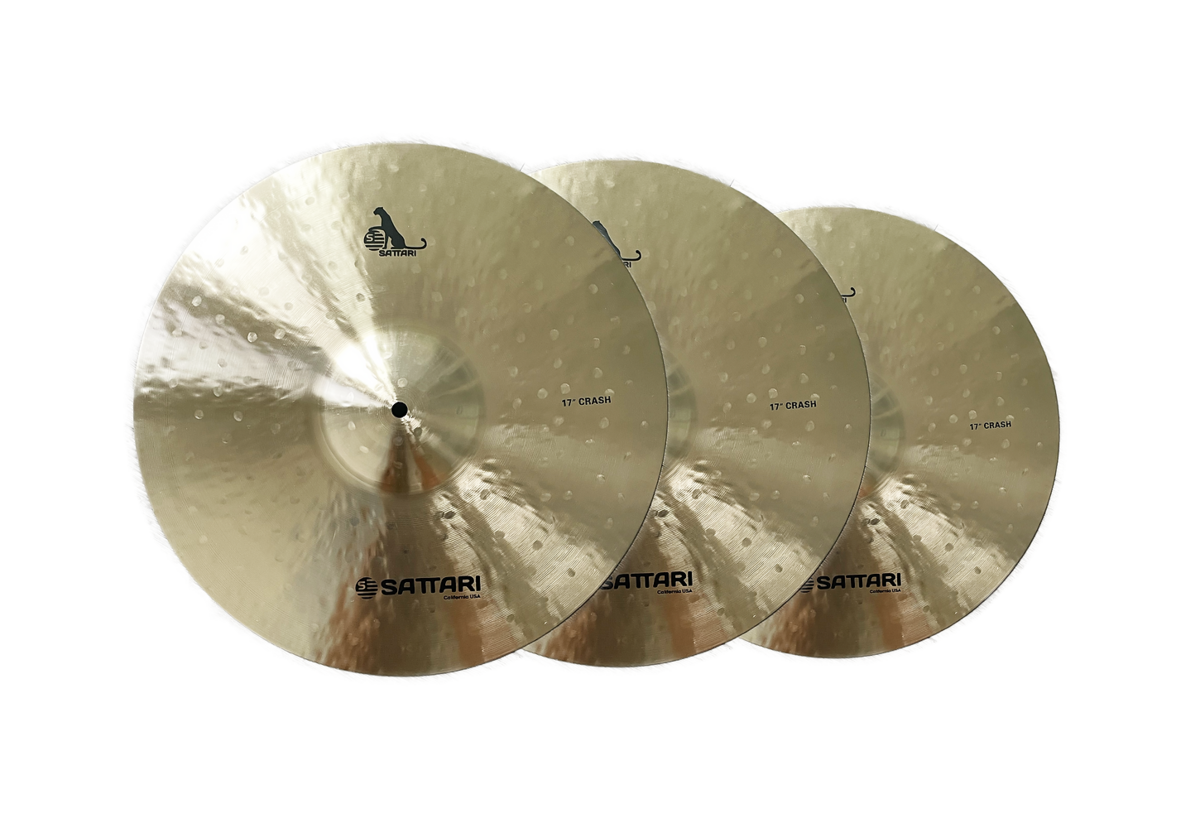
Give each cymbal a job
Hi-hats are a pair played with sticks and a foot pedal. Listen for a clear closed sound, a controllable open sound and a useful foot chick. A crash emphasizes a phrase or transition. A ride should give you a pulse you can hear without the whole cymbal washing over every note.
A crash-ride can combine two roles in a small setup, but try both roles before choosing it. Splash, China and other effects cymbals can wait until you know what your basic setup is missing.
Compare sound at the volume you actually play
Bring your usual sticks and play a simple groove on each option. Try quiet and louder strokes. Listen to the first attack, how long the sound hangs around, and whether the next hit stays distinct. A sound that is impressive alone may cover a singer or a quieter band.
Diameter, weight, profile and manufacture all contribute to the result. Labels such as bright, dark, thin or heavy can help you shortlist, but they do not replace listening. Do not buy only by alloy name or assume a higher price makes a cymbal right for every style.
A practical comparison checklist
- Play a closed hi-hat groove, then gently open the hats and close them with your foot. Check control and definition.
- Play the ride bow and bell. Check whether the stick remains clear as you repeat the pattern.
- Play a crash accent at your normal strength and let it decay. Does it open up comfortably, or do you feel pushed to hit too hard?
- Compare the cymbals together. Decide which sound is essential now, and leave room in the budget for compatible stands, sleeves and felts.
Buying used and setting up
For a used cymbal, inspect the edge, bell and center hole for cracks, damage or unusual wear. Ask about repairs and listen in person when possible. A short phone recording is useful context, but microphone placement and processing can change how it sounds.
Use the correct sleeve and felts so the cymbal is not resting directly on metal. Let it move instead of clamping it rigidly. Check the stand is stable and the cymbal is comfortably reachable. Ask a teacher or the shop to help with setup if you are unsure.
Browse the current Sattari cymbal catalog, then ask the shop about the specific model, availability and your playing situation. Product prices and stock belong on the product pages, where they can be kept current.