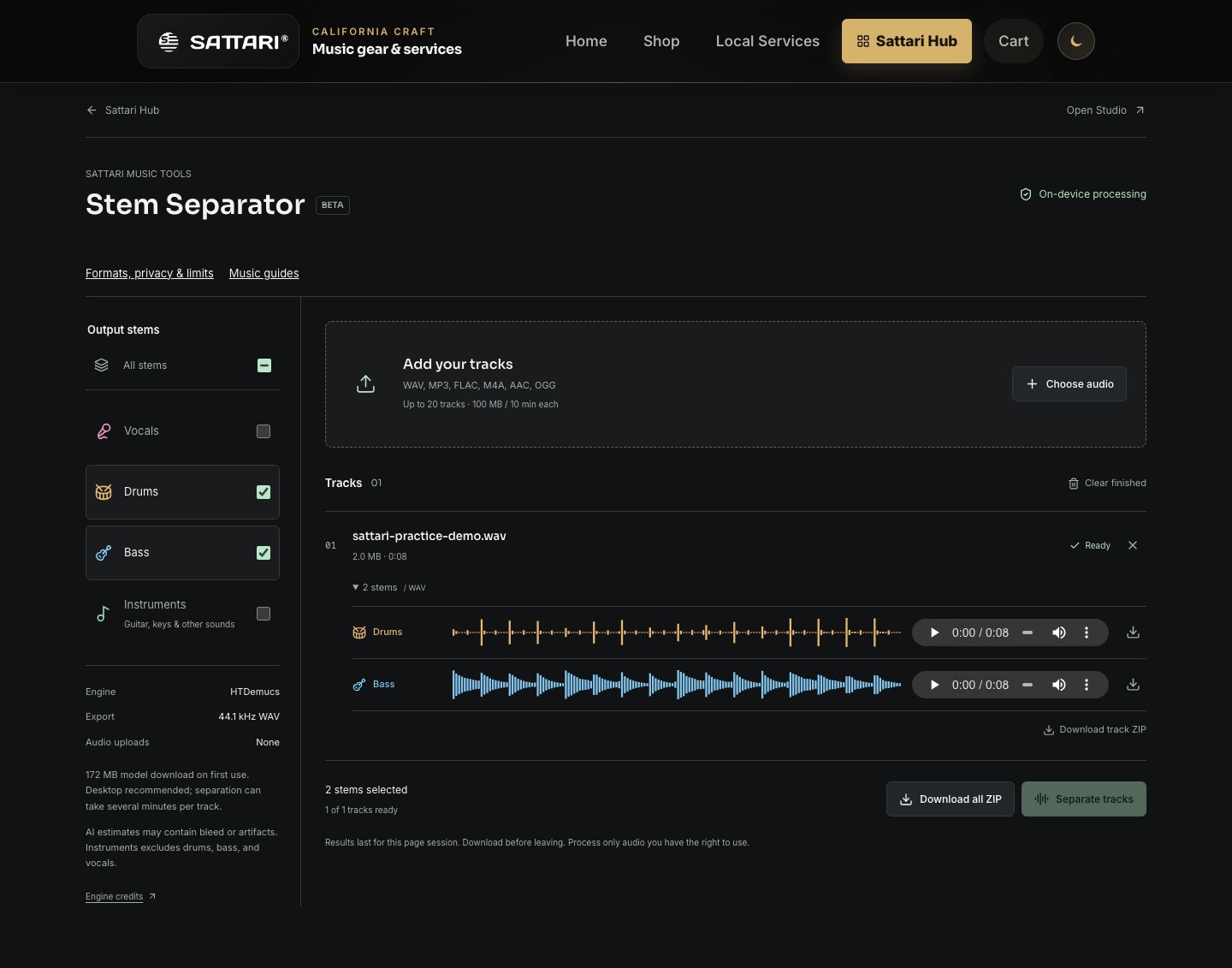
Open Sattari Stem Separator, add an audio file, select the parts you need, and start separation. Preview each result, then download the WAV files or ZIP before leaving the page. Processing happens on your device.
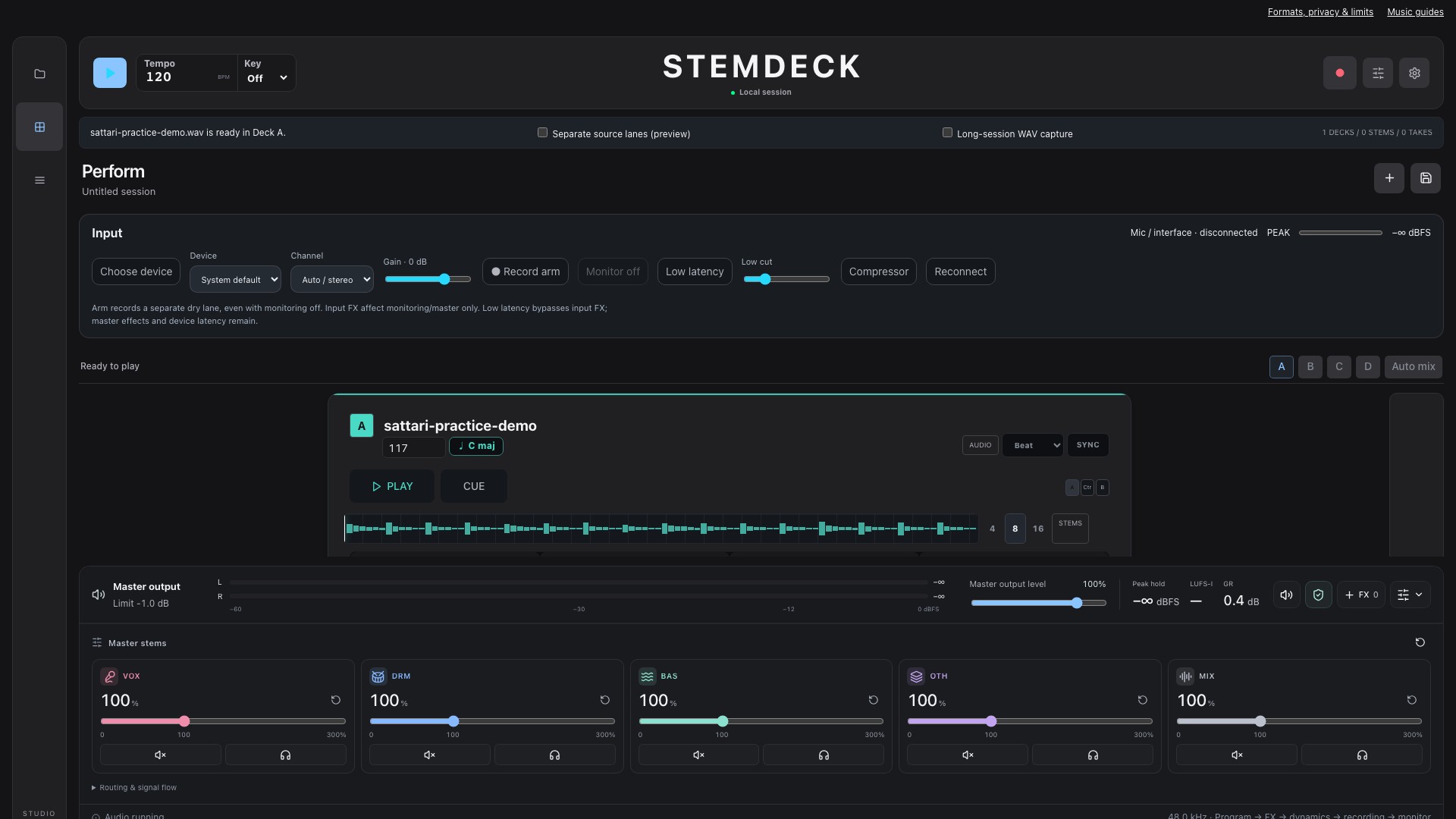
Separate the bass and drums, learn a short phrase by ear, and compare it with the full mix. Then mute the bass and play over the remaining stems. Use Studio to align the stems and build your practice backing track.
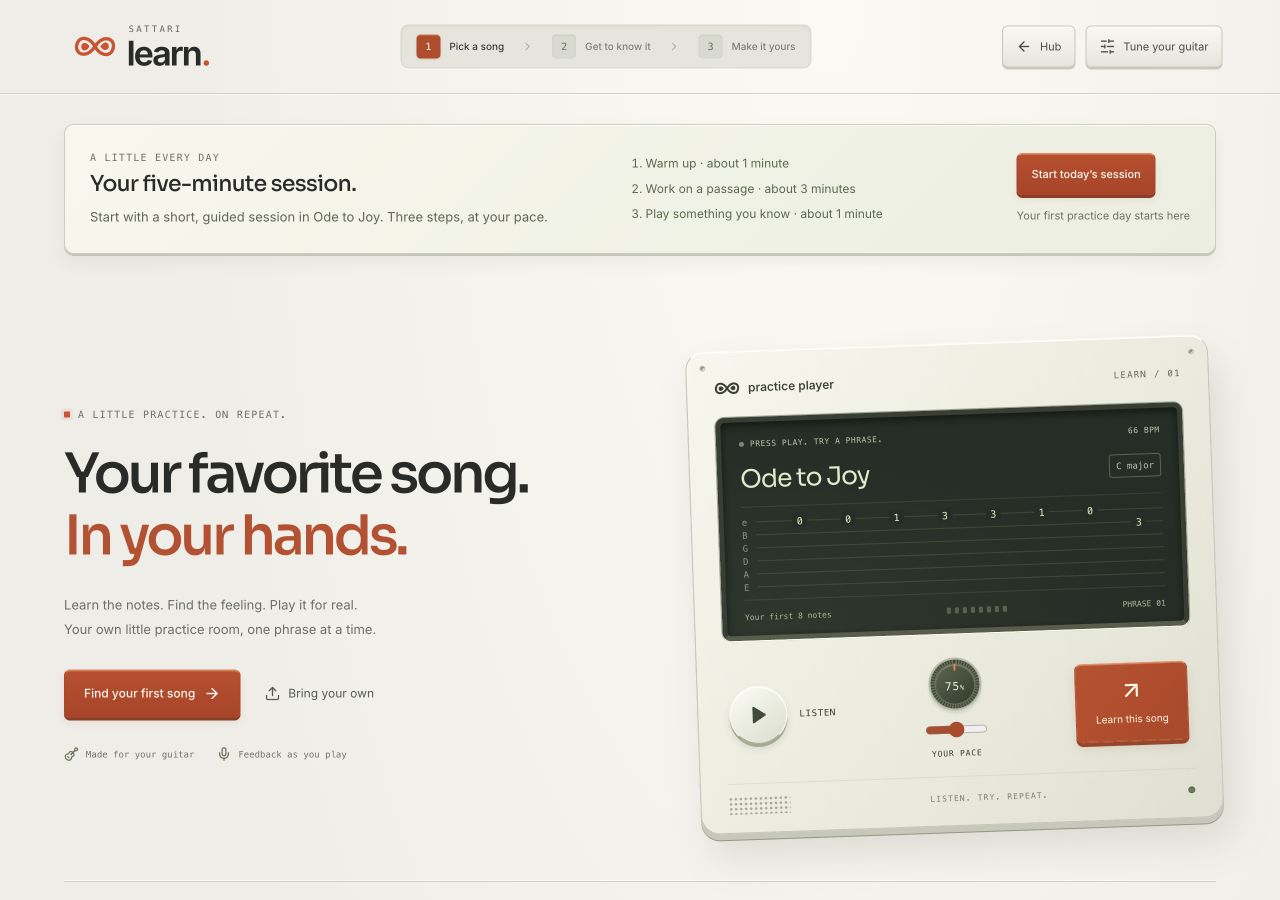
Choose a starter song or import your own audio or score. Review the guide, select a short passage, then enter focused practice. Hear the phrase, find the notes slowly, and build up to playing in time.
To make an estimated karaoke backing track, select Drums, Bass and Instruments in Sattari Stem Separator. Download those three WAV files and align their starts in Studio. Instruments alone is not the full backing track: it leaves out bass and drums.
Separate all four stems. Use Drums as your listening reference, then combine Vocals, Bass and Instruments with aligned starts for an estimated drumless backing track. Play the part yourself and compare your timing with the original drummer.
Add a song to Sattari Stem Separator and run separation. Its analysis estimates the original song's key and BPM, then analyzes the selected stems. Treat the results as listening clues, not a verified chord chart or transcription.
Drop several audio files into Sattari Stem Separator, choose the stem types once, and start the queue. Tracks process one after another on your device. Download individual WAVs, one track's ZIP, or a ZIP of completed tracks before leaving.
Encino musicians can contact Sattari Music in Woodland Hills about instrument repairs, setups and troubleshooting. The shop is at 4881 Topanga Canyon Blvd #202, Woodland Hills, CA 91364. Call (424) 465-3020 to discuss the instrument and arrange a visit.
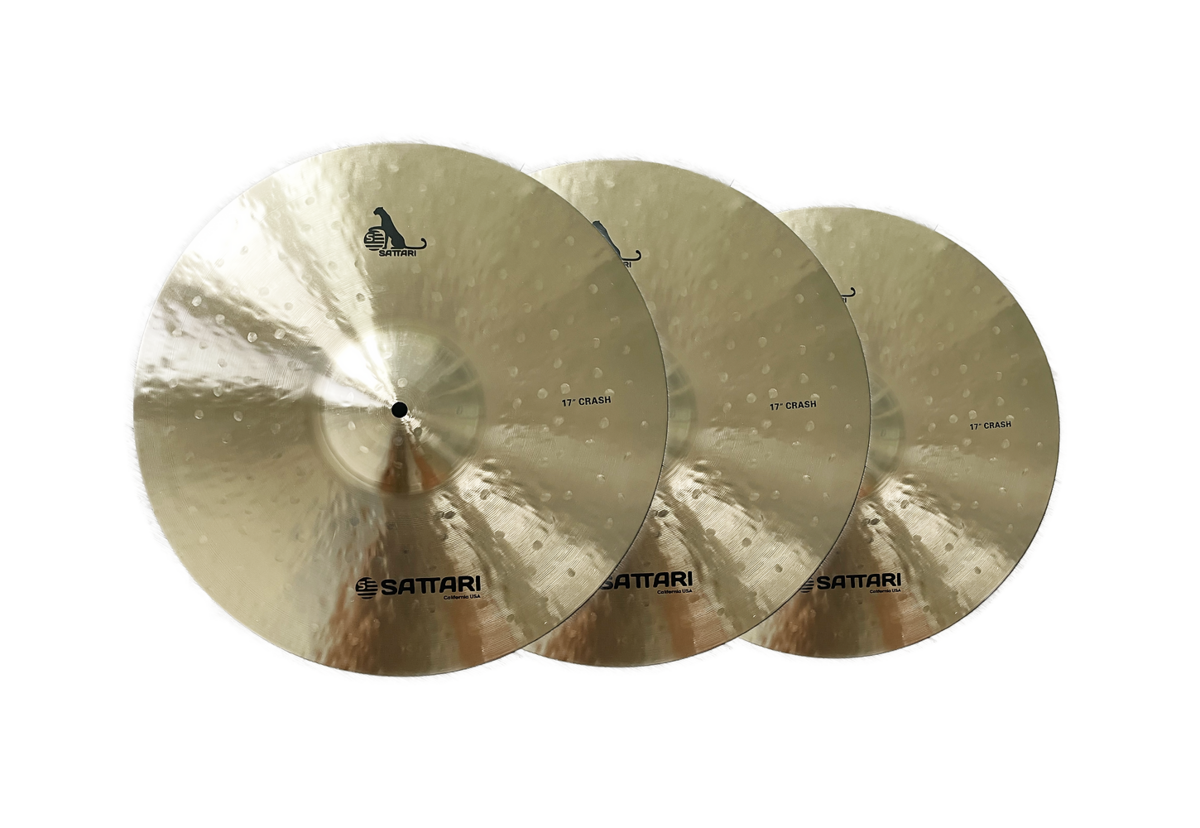
Start with the sounds you will use most: hi-hats for timekeeping, a crash for accents and a ride for a sustained pulse. Compare them at your normal playing volume, and budget for stands and protective fittings as well as the cymbals.
A guitar typically needs a setup when it buzzes or feels stiff to play, when frets feel sharp on the edges, when it drifts out of tune after every song, or when notes at the 12th fret are noticeably sharp or flat compared to the open string. A professional setup adjusts neck relief, action, nut and saddle height, and intonation — all together, which is why individual adjustments often cause new problems.
Finger-tighten all lugs evenly, then use a drum key to add tension in a star pattern — tuning opposite lugs together in small increments. Tap one inch from each lug and listen for pitch consistency. When all lugs ring at the same pitch, the head is even. A focused crack means even tension at the right pitch range; a dull thud or uncontrolled ring usually means uneven lugs or a worn head.
After every session, wipe rosin dust from the strings, top of the instrument, and the stick of the bow with a soft dry cloth. Store the violin in a closed case away from direct heat, sunlight, and sudden humidity changes. Rosinate the bow before each practice session — four to six slow, even strokes across a fresh cake of rosin is usually enough.
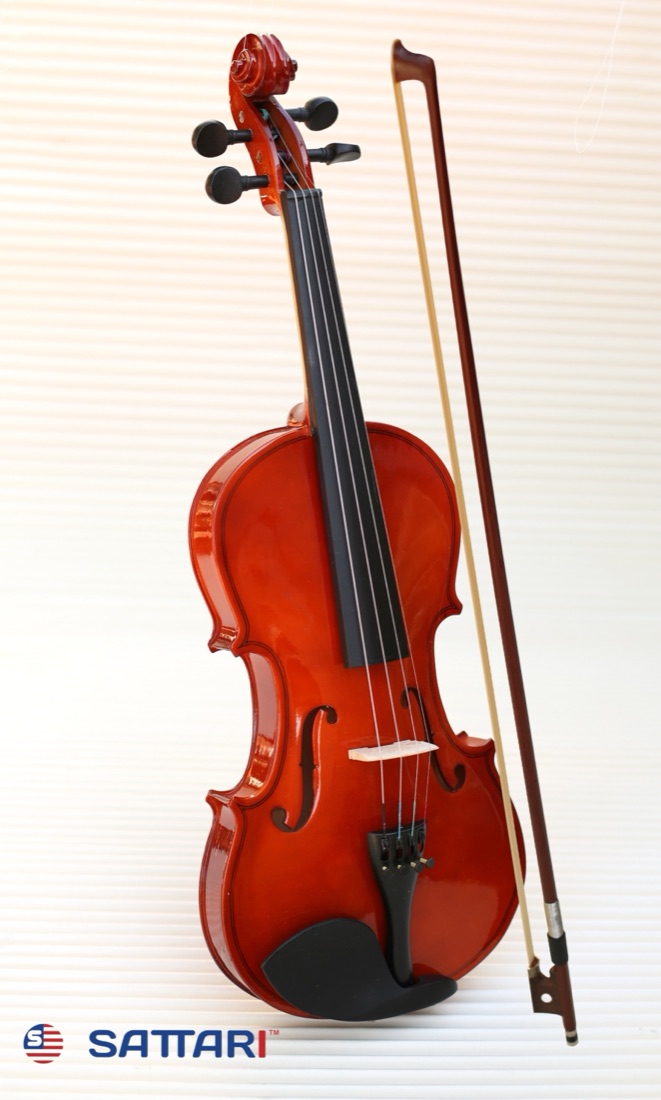
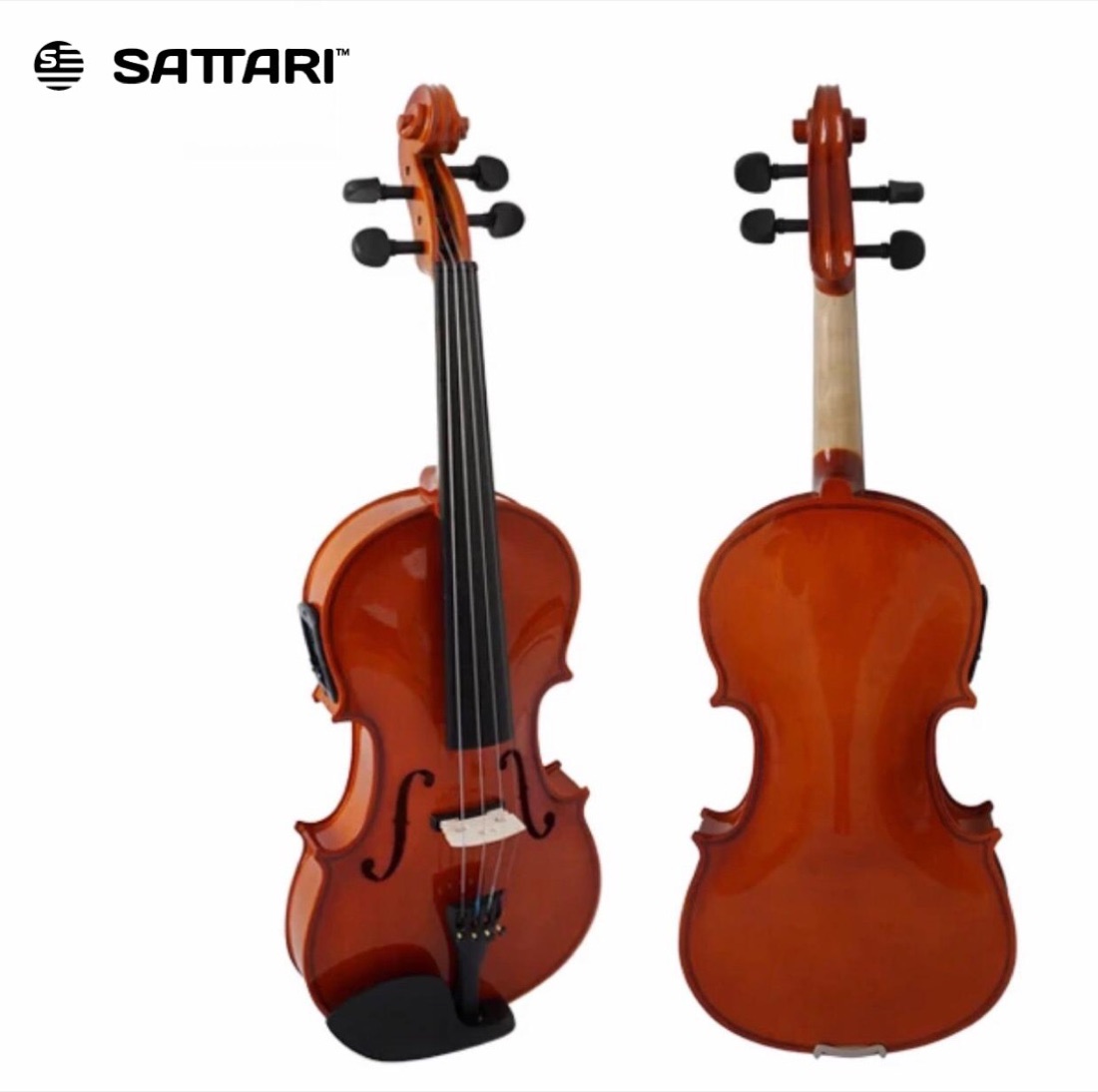
For most beginners, a full-size (4/4) acoustic violin with a bow, case, and rosin included is the right starting point. Size matters most: an instrument that is too large causes strain and slows progress. Ask your teacher to confirm the size before buying.
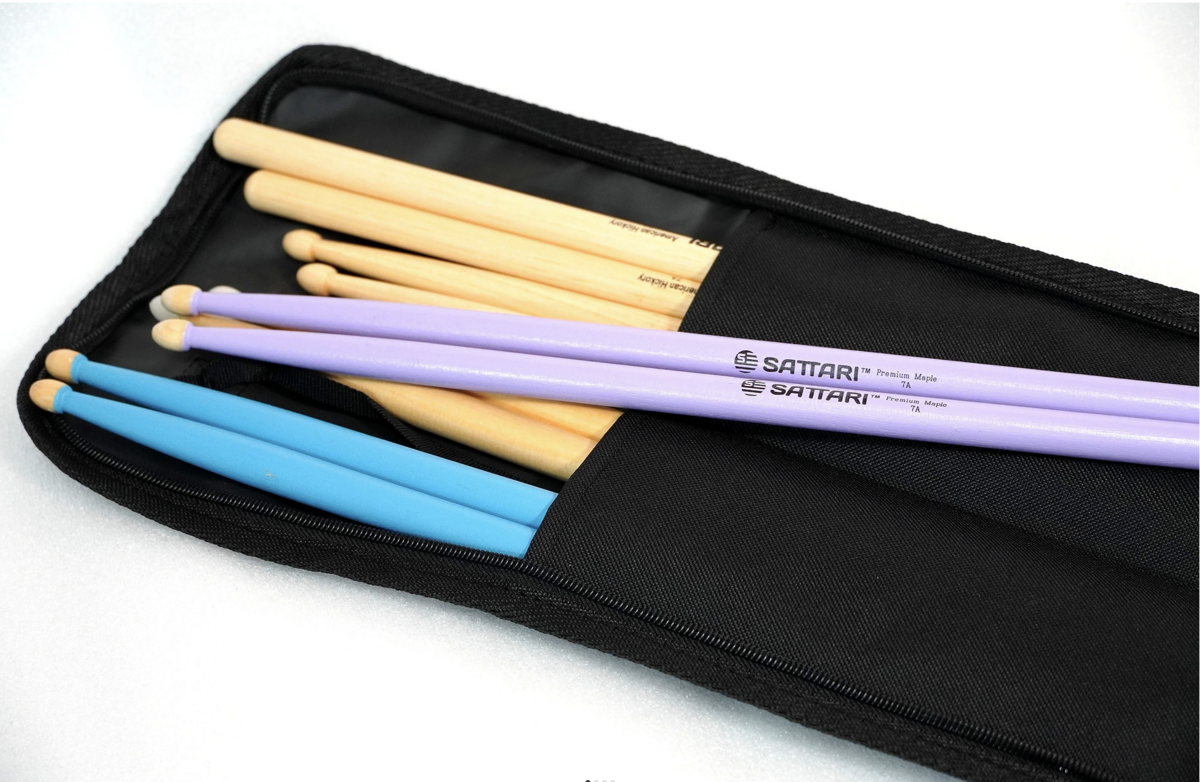
5A hickory drumsticks are the standard starting point for beginners. The 5A size is versatile, comfortable for most hand sizes, and works well across rock, pop, and practice sessions. Hickory absorbs shock well, which reduces fatigue.
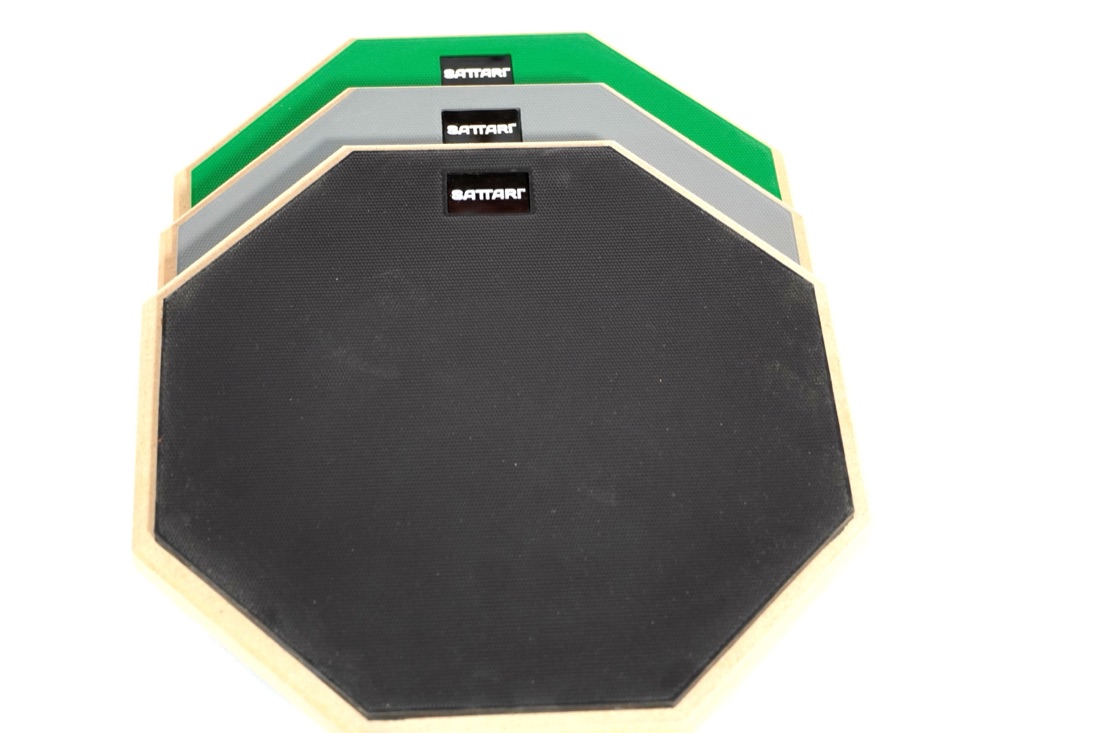
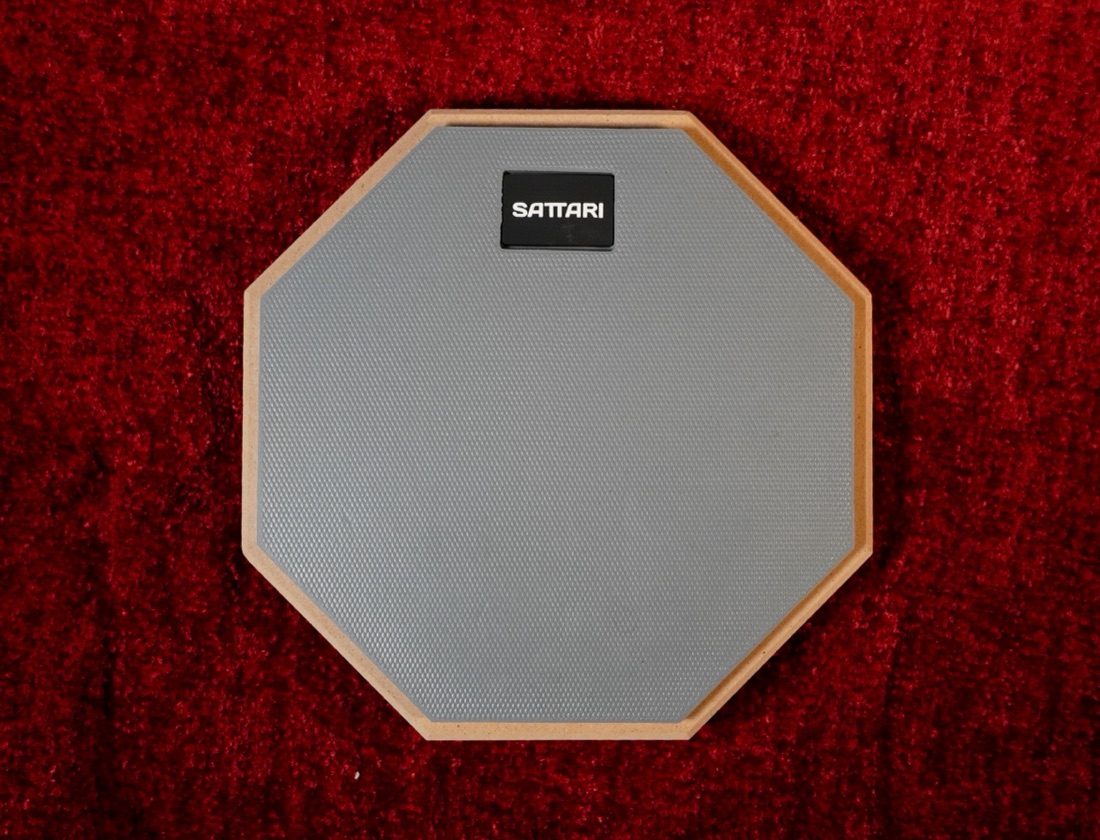
An 8-inch rubber practice pad is the standard starting point: quiet enough to use at home, light enough to carry, and sufficient for developing a consistent stroke. Move up to a 12-inch pad when you want more playing surface, a closer snare feel, or plan to share it with a teacher.
A full-size steel-string acoustic is the right starting guitar for most beginners. Nylon-string classical guitars suit fingerstyle, classical technique, and younger players. The two feel and sound different — choosing between them depends on the style of music you want to play, not just budget.
Wipe down your strings after every session, keep the guitar away from extreme heat and humidity swings, and store it in a case or on a stand away from direct sunlight. Do this consistently and your guitar will stay in good playing condition for years.
Choose an acoustic violin if you want the natural, resonant tone used in lessons and classical playing. Choose an electric violin if you need to practice quietly with headphones, play through an amp or pedals, or perform on a loud stage. Many players eventually own both.
A nylon-string guitar has softer strings that are gentler on beginners’ fingers and a warm, mellow tone for classical, flamenco and folk. A steel-string guitar is brighter and louder and suits pop, rock, country and singer-songwriter styles. Pick the one that matches the music you want to play.
Change one string at a time so the bridge and soundpost stay in place. Loosen the old string, fit the new one through the tailpiece and peg, wind it neatly, tune up slowly, and check that the bridge stays upright. Strings need replacing when they sound dull, false or look frayed.